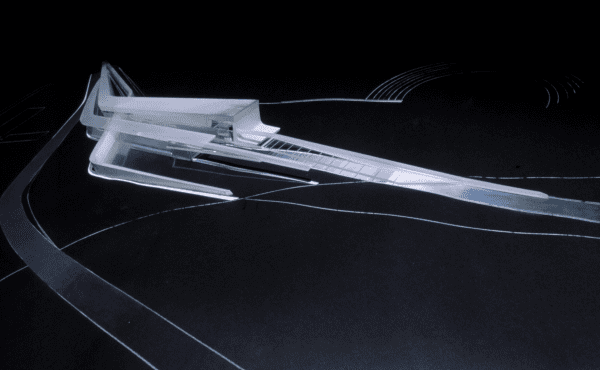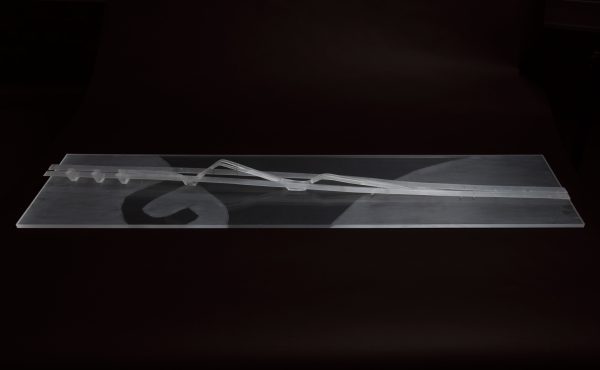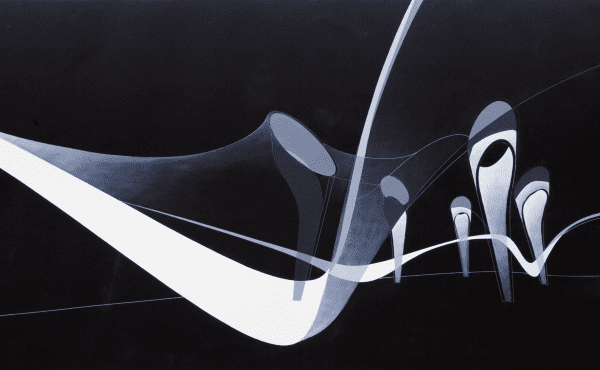
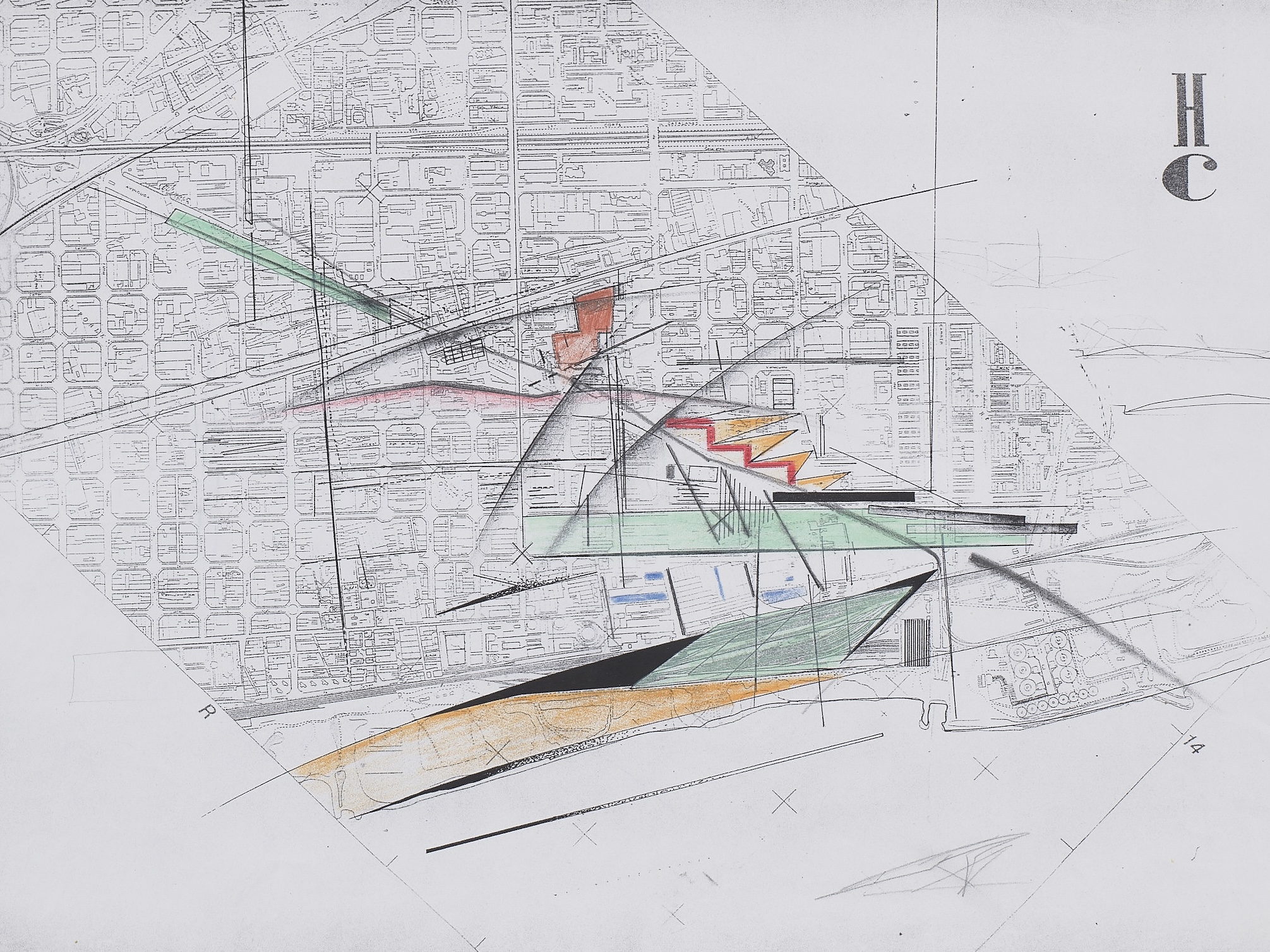
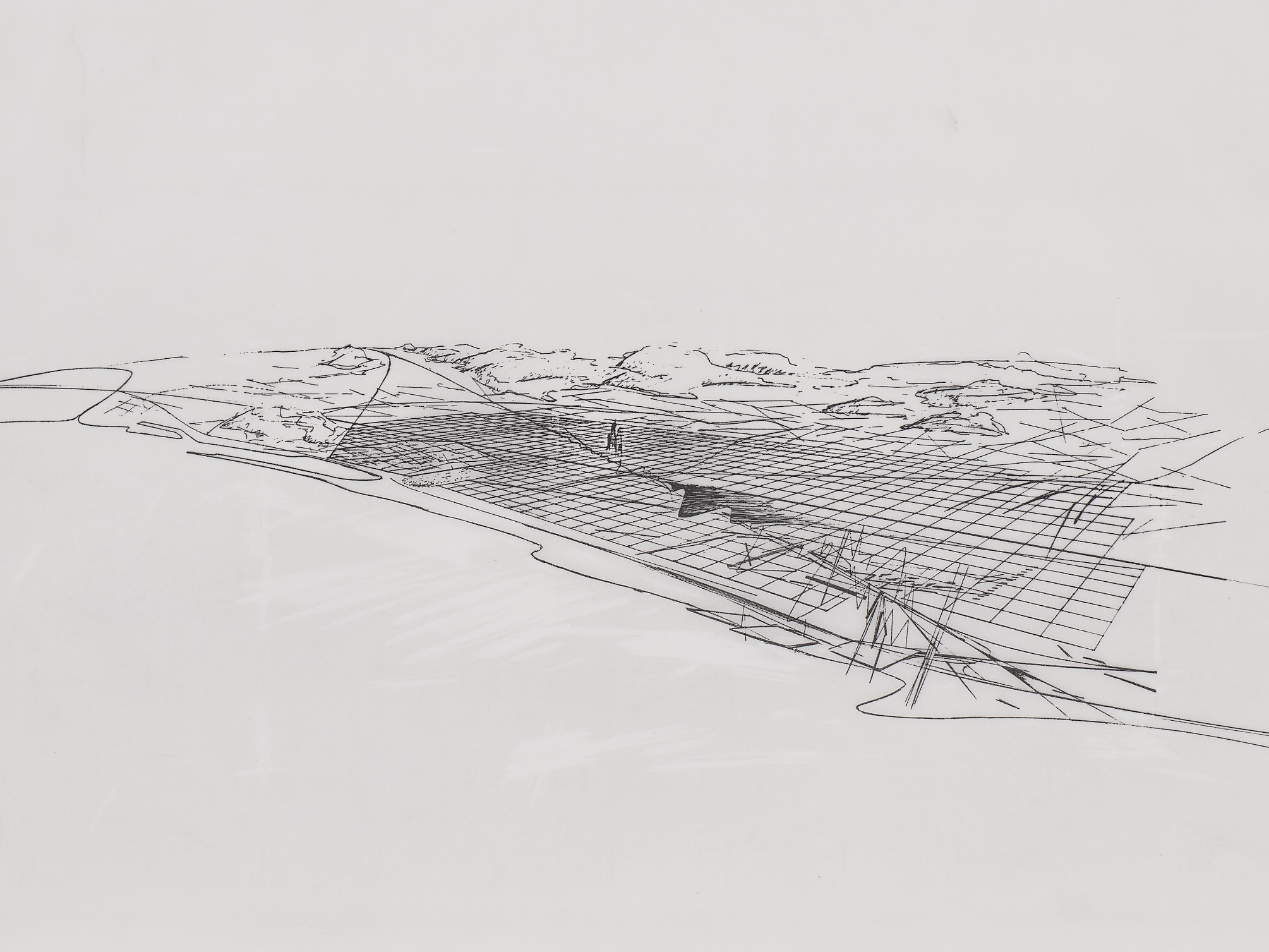
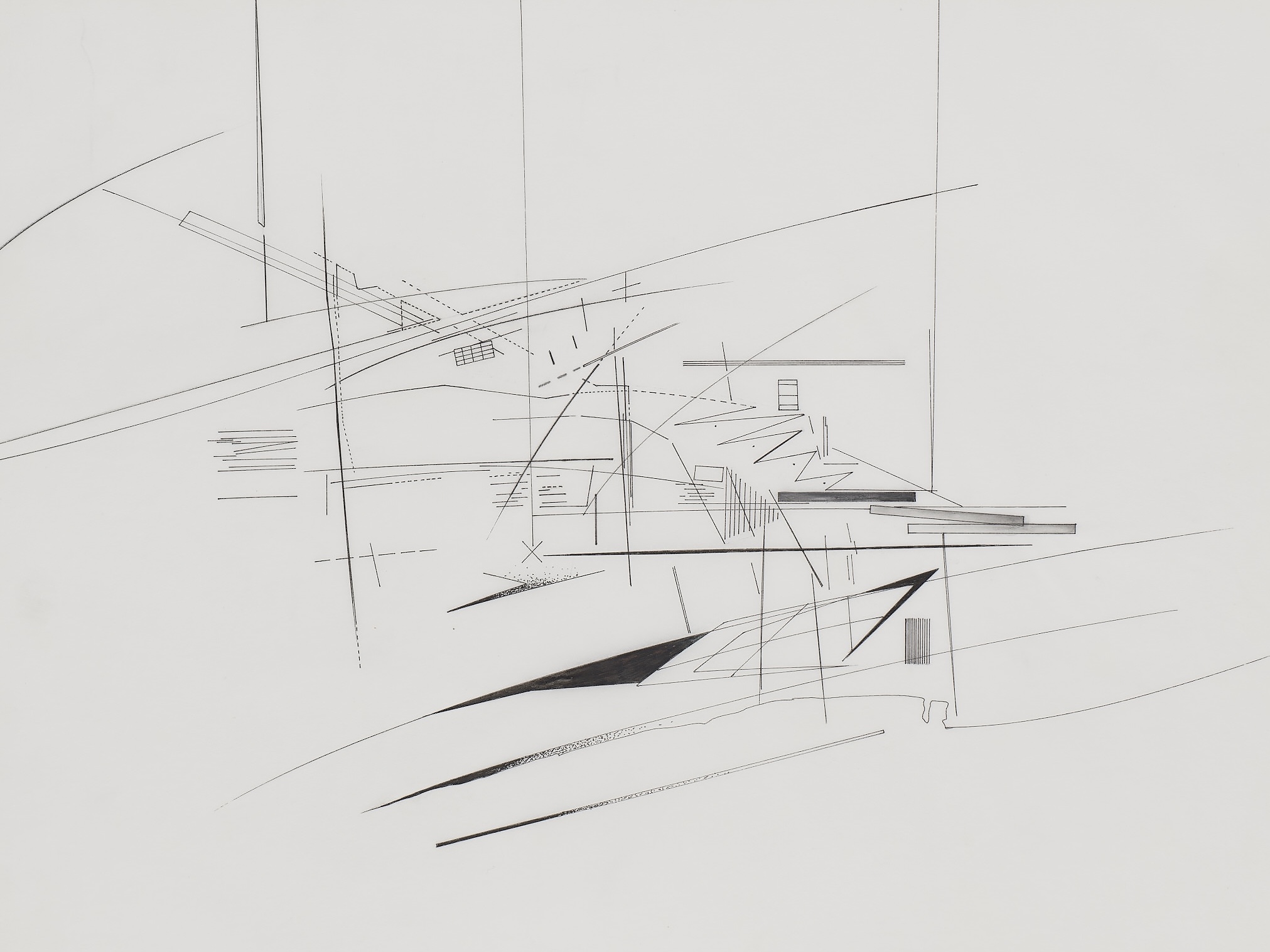

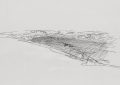
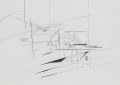
Zaha Hadid Architects’ response to the 1988 international competition in Barcelona, Housing and the City, exemplified their conceptual approach to urbanism. The competition sought new speculative propositions on housing and its role in reshaping Barcelona’s urban fabric, in light of hosting the 1992 Olympics. It focused on the eastern extension of the Avinguda Diagonal, a vital axis of Ildefons Cerdà’s 19th-century masterplan.
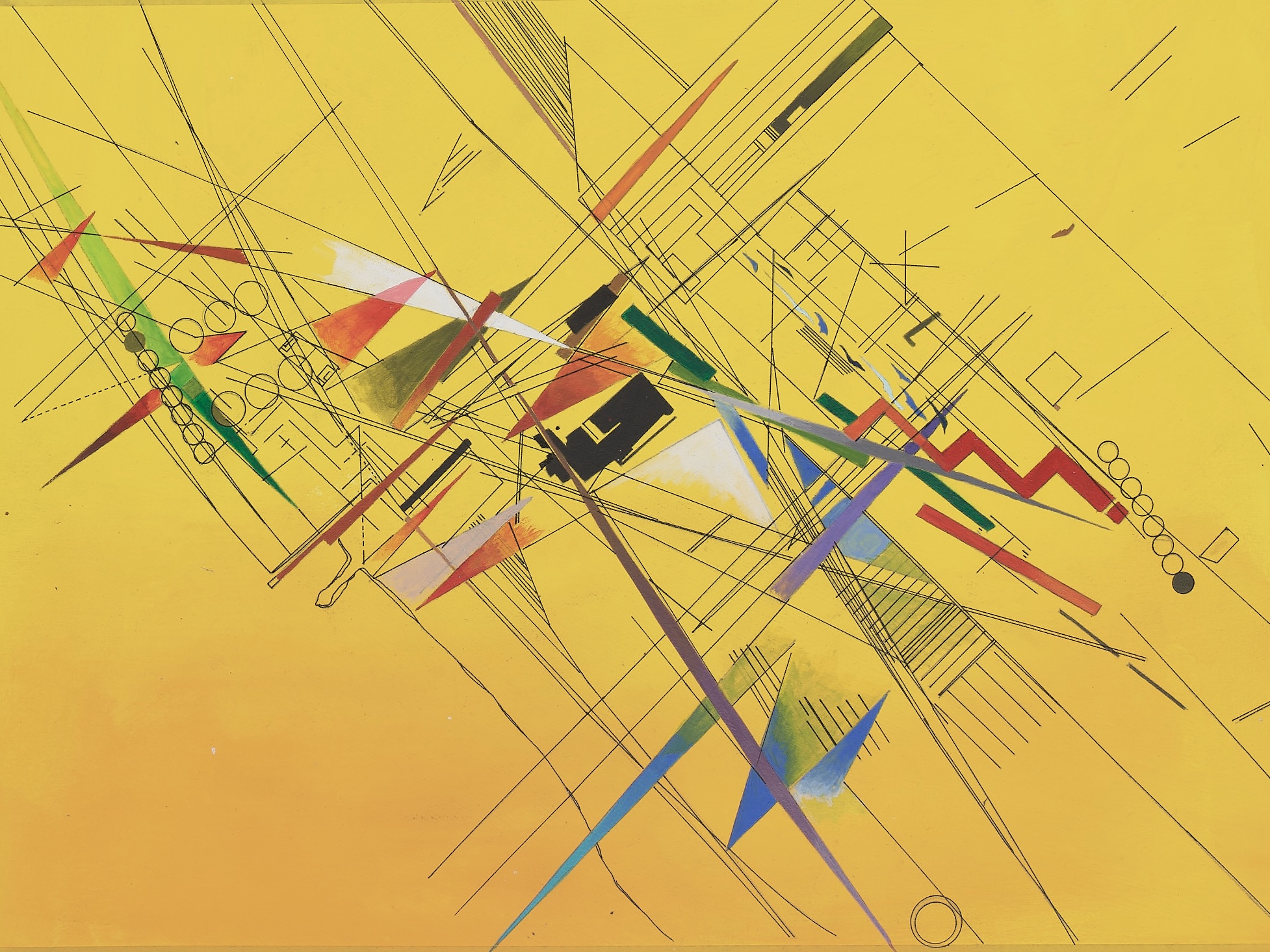
Hadid’s proposal embraced a fragmented reinterpretation of Cerdà’s grid, introducing interlocking, skewed geometries that twisted and distorted the city’s established axis. The accompanying painting illustrates Hadid’s method of deconstructing the site. It envisioned the Diagonal as an ‘elastic corridor,’ traversing and adapting to varying local conditions, such as irregular village zones, gridded housing areas, and railway and waterfront strips. Abstracted urban elements float dynamically, tracing their trails in intersecting colour gradations and dashed pathways—projecting a transient, vibrant and interconnected metropolitan environment. The resulting scheme was intended to encourage street-level activity, increasing social interaction.
Hadid’s design transcended conventional housing paradigms, injecting dynamism and complexity into the entire city. A similar approach had emerged two years earlier, in New York, Manhattan: A New Calligraphy of the Plan (1987) where the American grid is reconfigured through charged insertions. Both projects share a strategic interest in spatial disruption, exploded geometries and layered fields towards ‘a new’ metropolitan way of living.